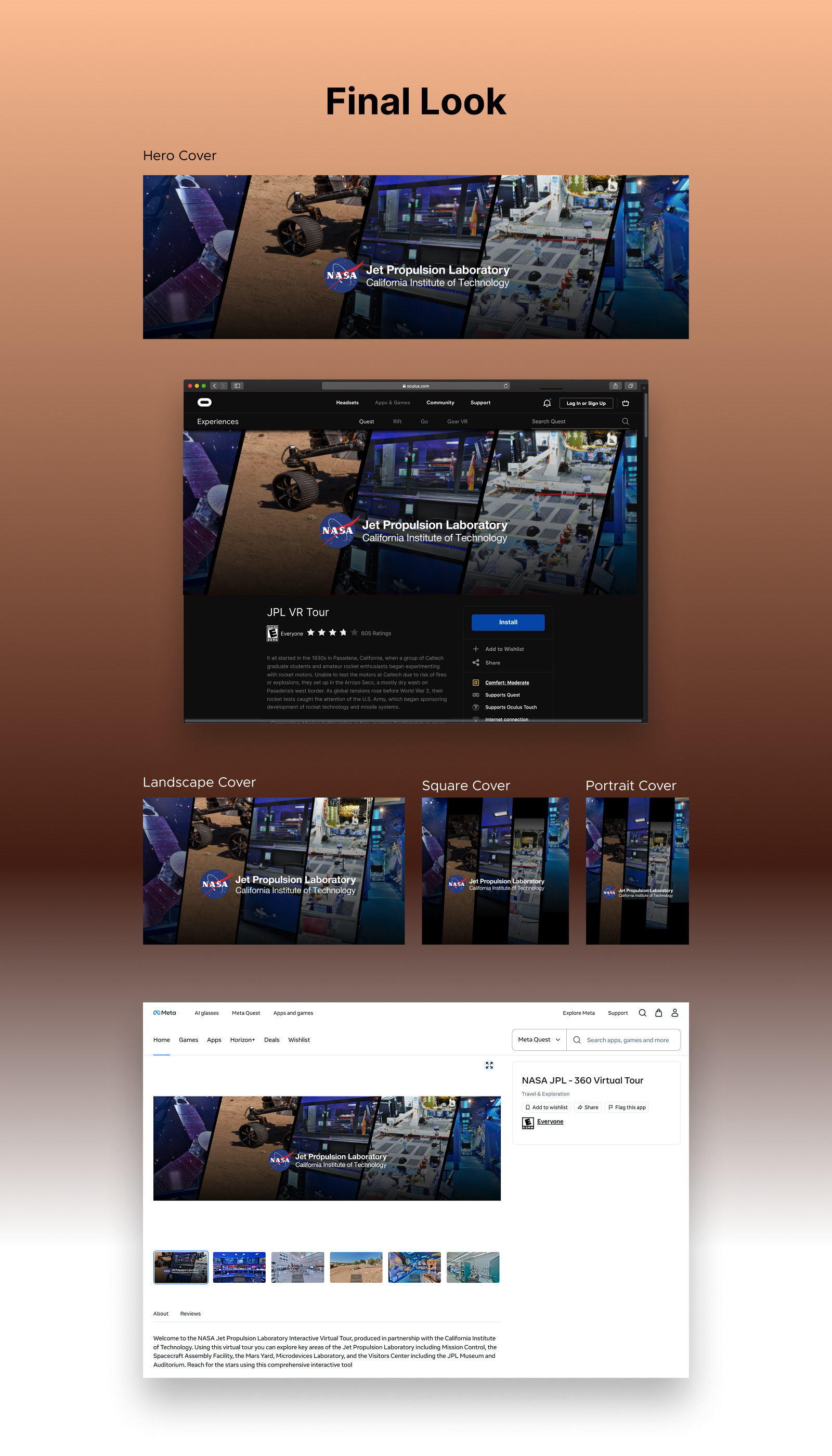
PROJECT: Interface and branding work for the JPL VR Tour, an interactive virtual tour of the Jet Propulsion Laboratory produced in partnership with the California Institute of Technology. The work spanned two scopes. The first was the navigational interface a visitor uses to move through the tour, designed within a framework built by an external contractor. The second was the branded asset suite that defines how the experience presents itself across the Meta Quest ecosystem, from flat 2D store listings to fully immersive 3D environments where branded layers float and interact in VR space. Together they cover both how the tour is used and how it is presented.
ROLE: UI/UX and Brand Designer
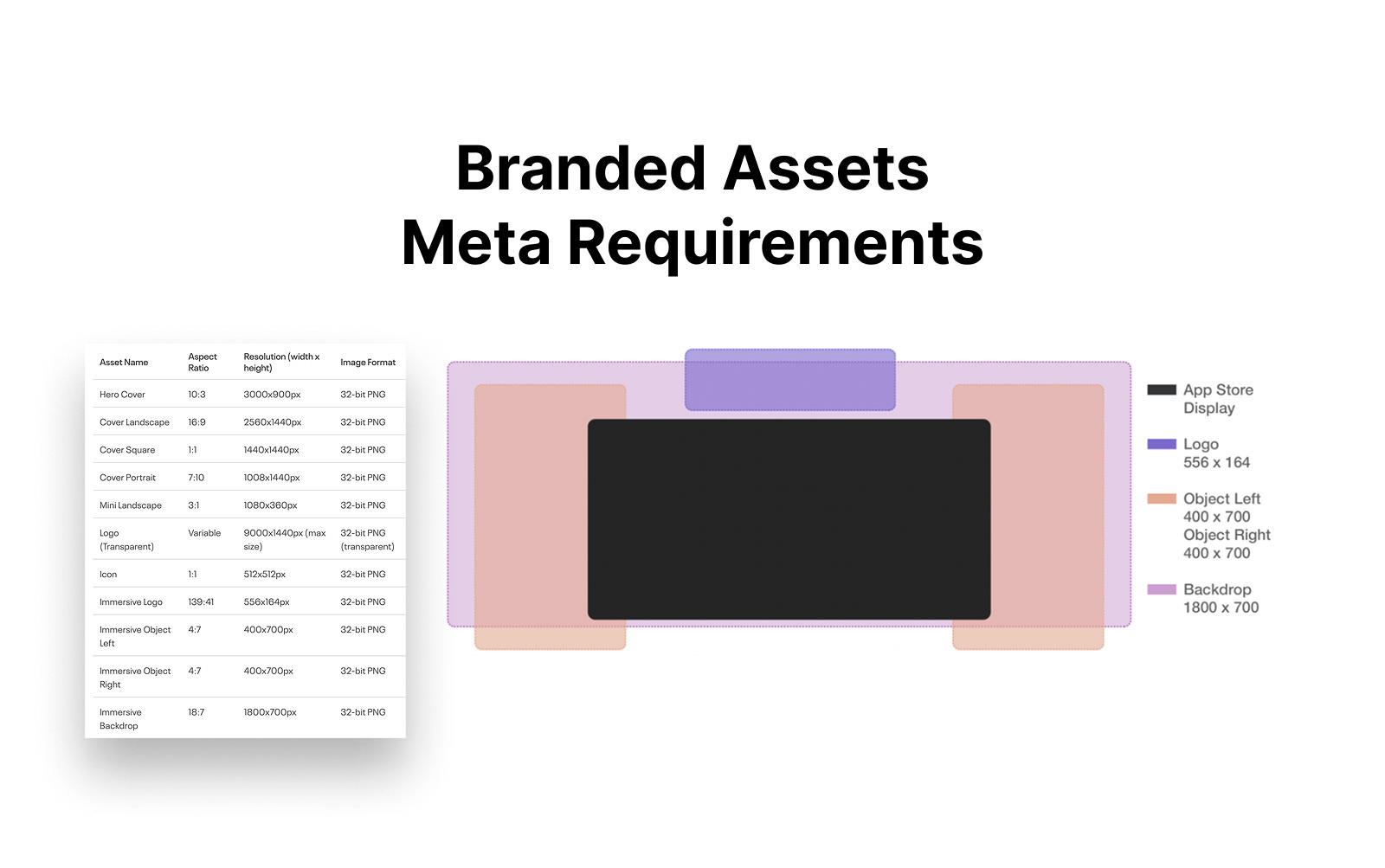
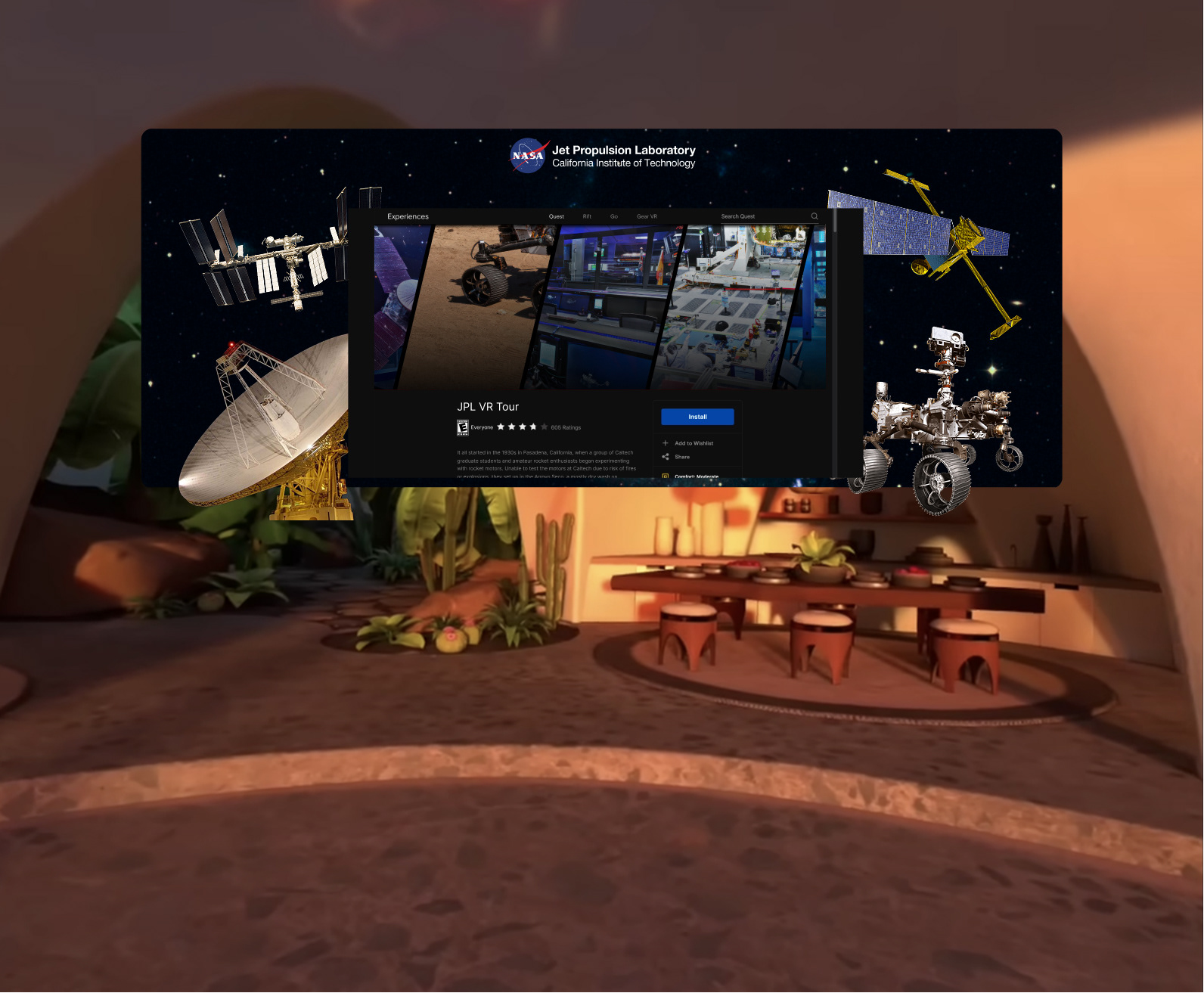
DELIVERABLES: A navigational icon set, an in-scene reticle system with perspective baked into the flat asset to work within the framework's scale-only rendering, and an orbit interaction model for the tour interface, followed by a complete Meta Quest Store asset suite spanning 2D store covers (Hero, Landscape, Square, Portrait, and Mini), app Icon, transparent logo lockups, and a full set of immersive 3D elements, Backdrop, Immersive Logo, and paired floating Objects. All branded assets delivered as 32-bit PNG.
About the Interface Work
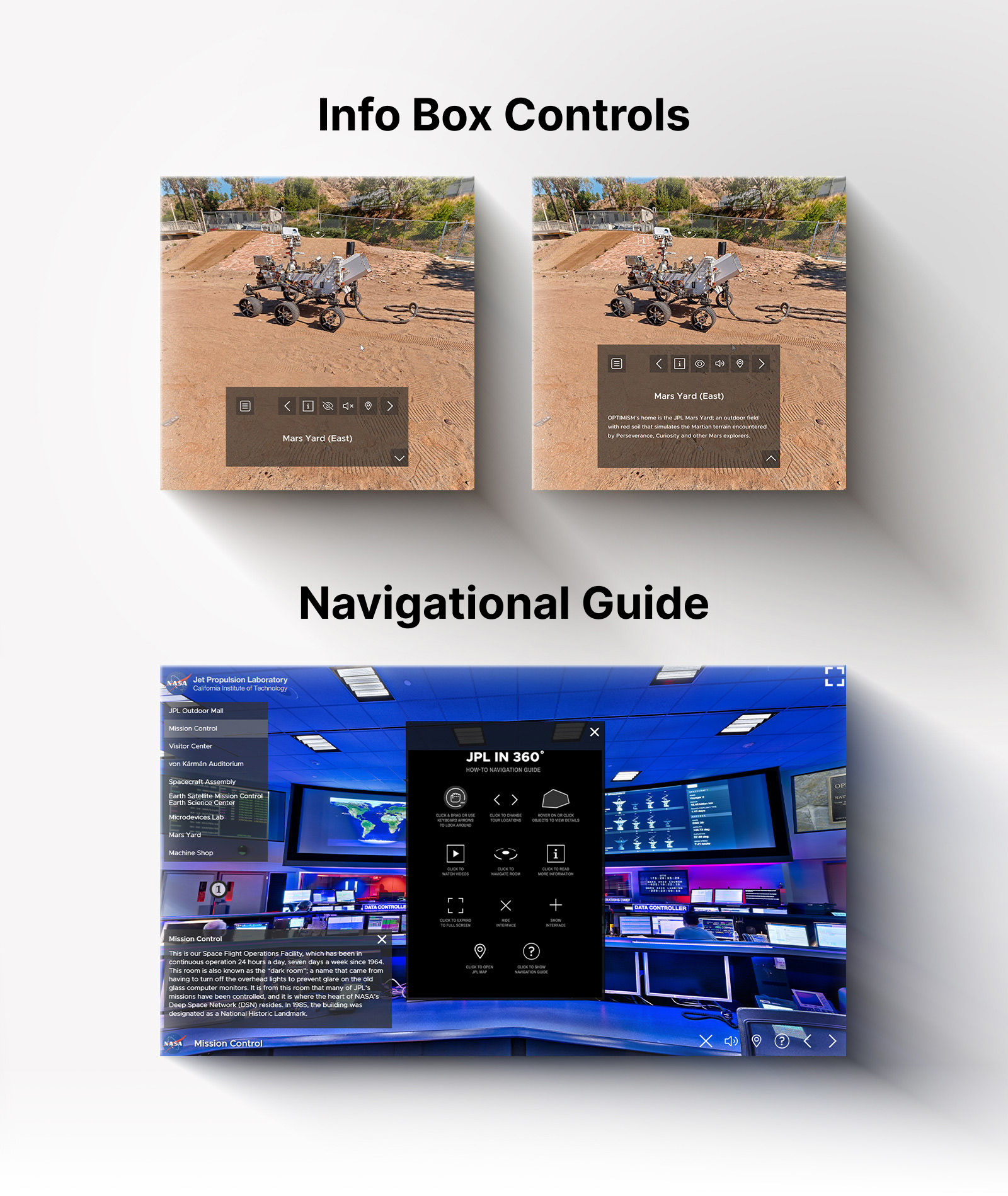
The JPL 360 Tour runs on a framework built by an external contractor. Within that existing template, the navigational icon set, the in-scene navigation reticle, and the orbit interaction model were the design contributions.
Icon Set
The icons govern the controls a visitor uses to move through the tour: the menu, location stepping, the information panel, interface visibility, audio, room navigation, and map access. Each was drawn as an outlined glyph to stay legible over busy photographic scenes, and several are state-aware, shifting between paired forms such as muted and active audio, or hidden and visible interface, so the icon always reflects the action it will trigger.
In-Scene Reticle
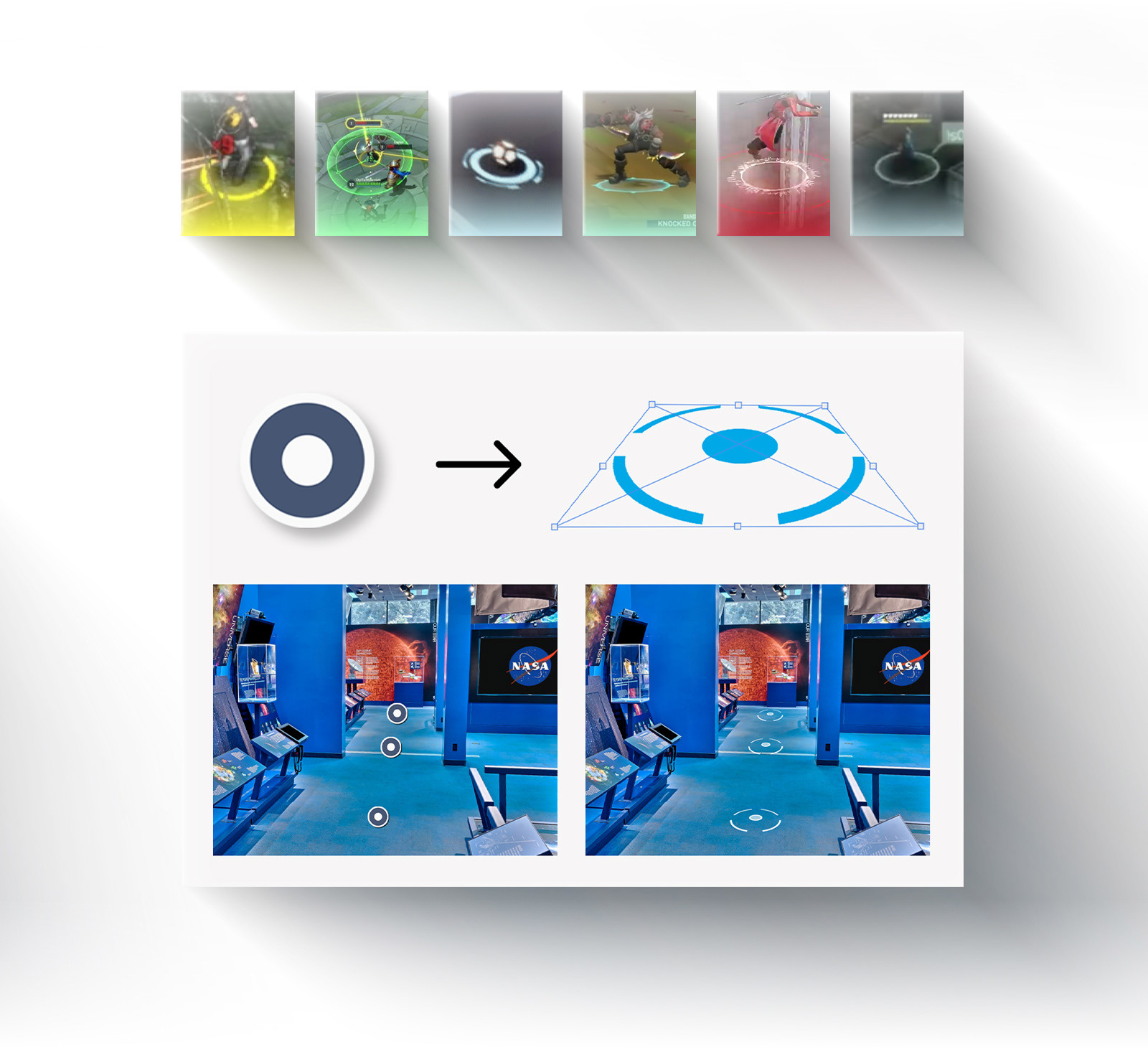
The in-scene navigation marker was redrawn to communicate placement in the space. The earlier version was a flat disc, a dark circle with a center dot, rendered face-on to the screen. It read as a button sitting on top of the photograph, giving no sense of depth or of where a step would land a visitor.
The replacement had to work within a hard constraint: the tour framework could only load flat graphics and scale them, with no true 3D placement. The solution was to bake the perspective into the asset itself. The new marker is a grounded reticle, a center dot ringed by arc segments, drawn already foreshortened into the perspective of the floor. Depth is then sold through the one capability the system offered: markers are scaled smaller for distant positions and larger for those near the visitor's standing point, so flat graphics read as points receding through real space.
Ground-Marker Inspirations
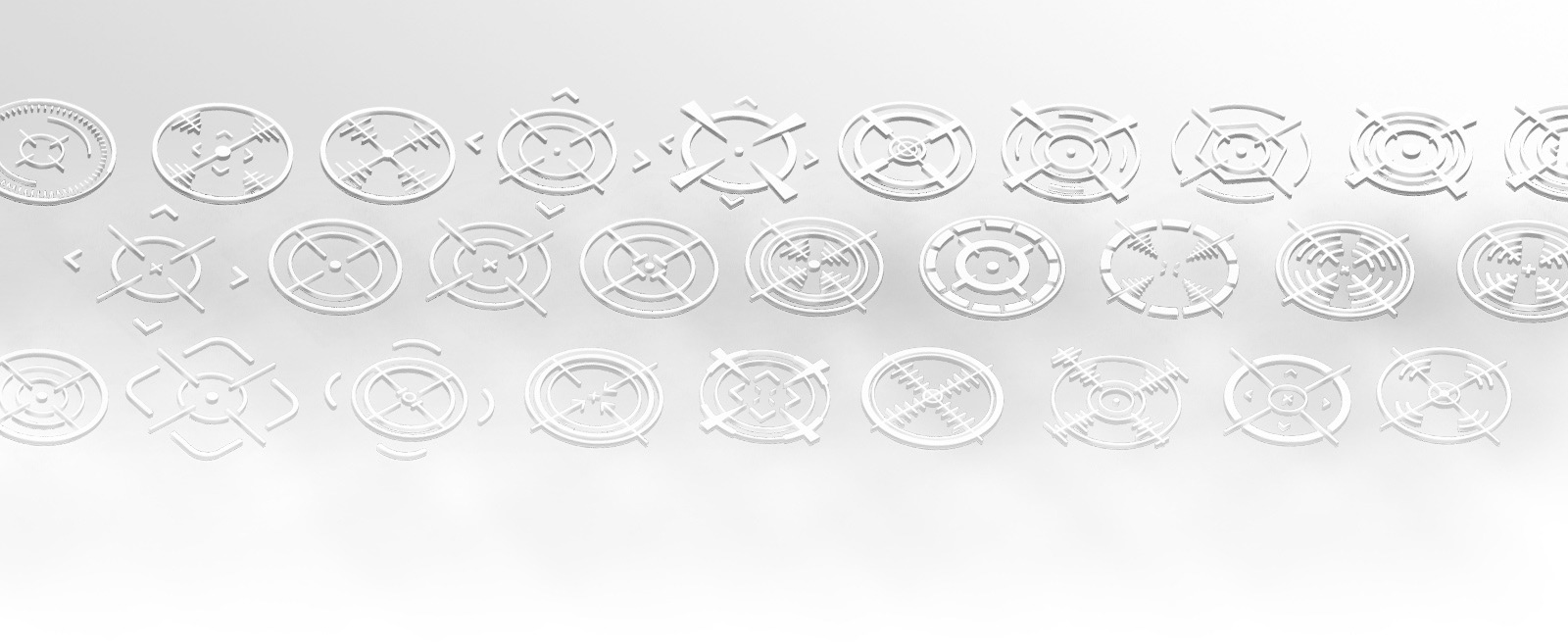
The form draws on the ground-marker convention of 3D game interfaces, where rings projected onto the ground plane mark selection, targeting, and movement destinations, a visual language people already read without instruction. Applied to the tour, each reticle marks exactly where the visitor will be standing after the move.
Reference imagery from commercial game interfaces, shown at reduced scale for design commentary. Sources, left to right: Zombie Apocalypse, Konami; League of Legends, Riot Games; Unreal Engine community demo; Battle Chasers: Nightwar, Airship Syndicate; Devil May Cry, Capcom; Shadowrun: Hong Kong, Harebrained Schemes. All imagery property of its respective owners.
Orbit Model
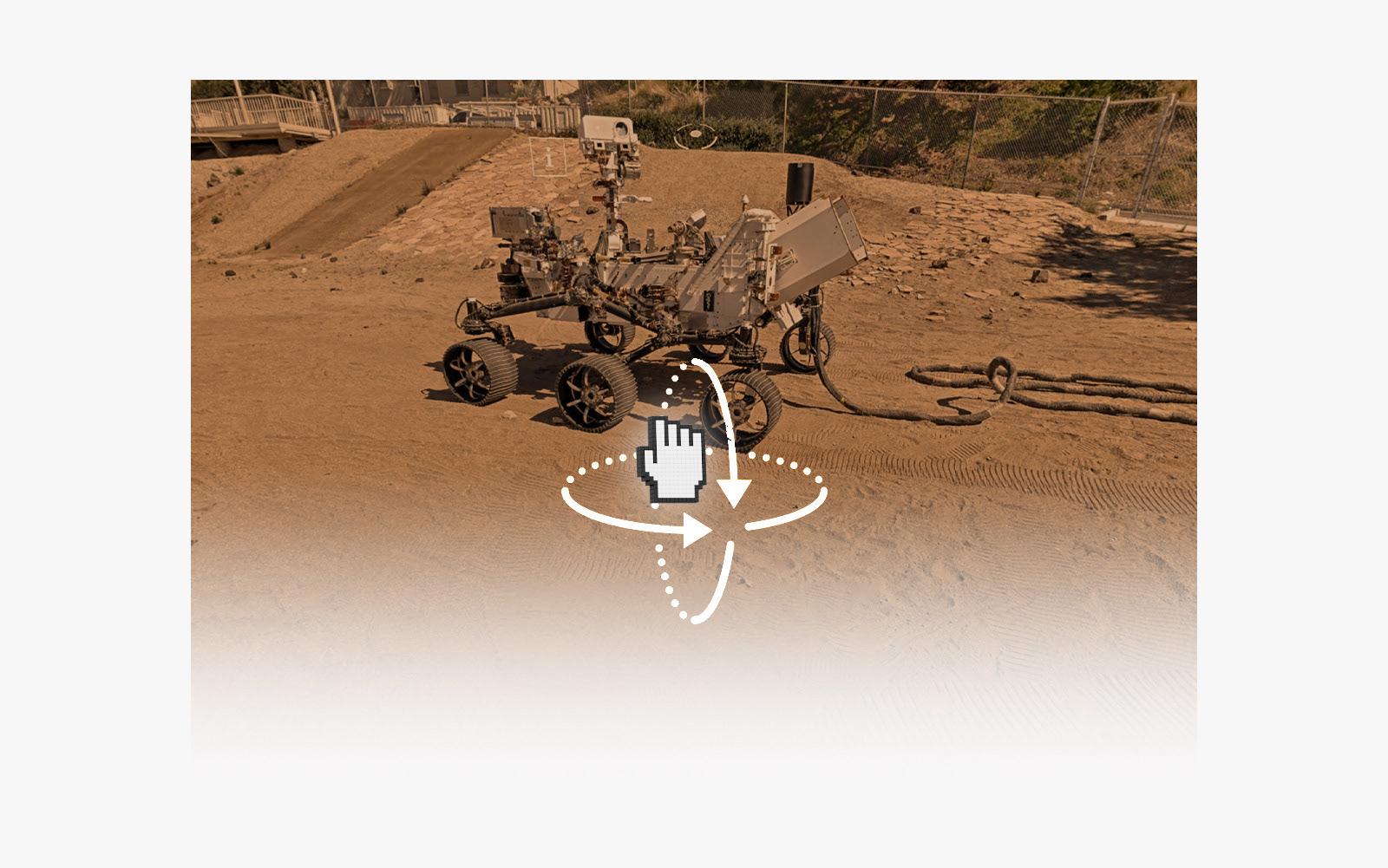
The orbit interaction followed a "drag to reveal" recommendation, where the scene moves opposite to the drag so the world feels grabbed and pulled. Dragging right to left reveals more of the right; left to right reveals more of the left; up to down reveals what sits below; down to up reveals what sits above.
About the Meta Branding Concepts
Two directions shaped the exploration.
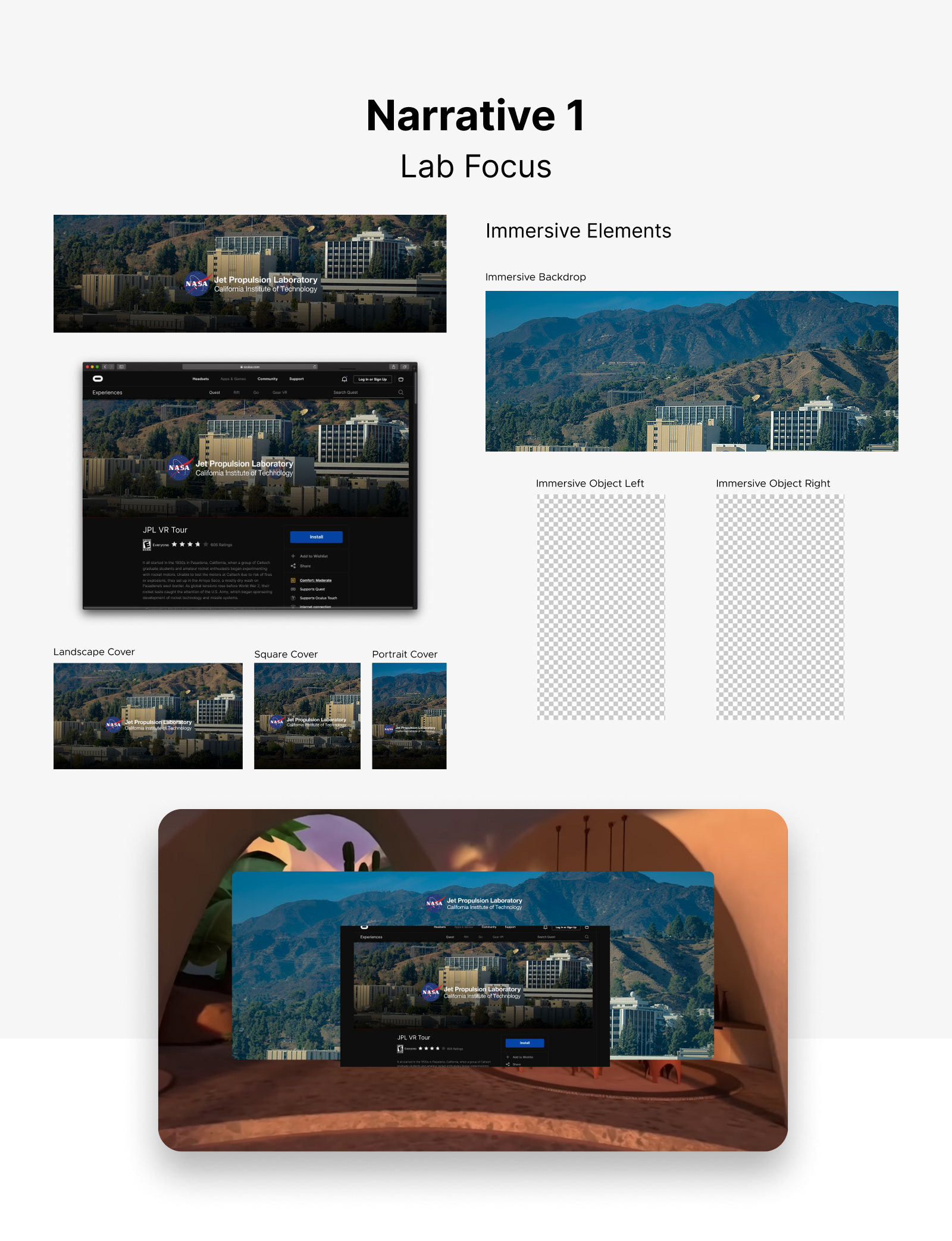
The first centered on JPL's public presence, anchoring the composition in imagery of the Laboratory itself and deliberately holding back floating elements to keep focus on the institution.
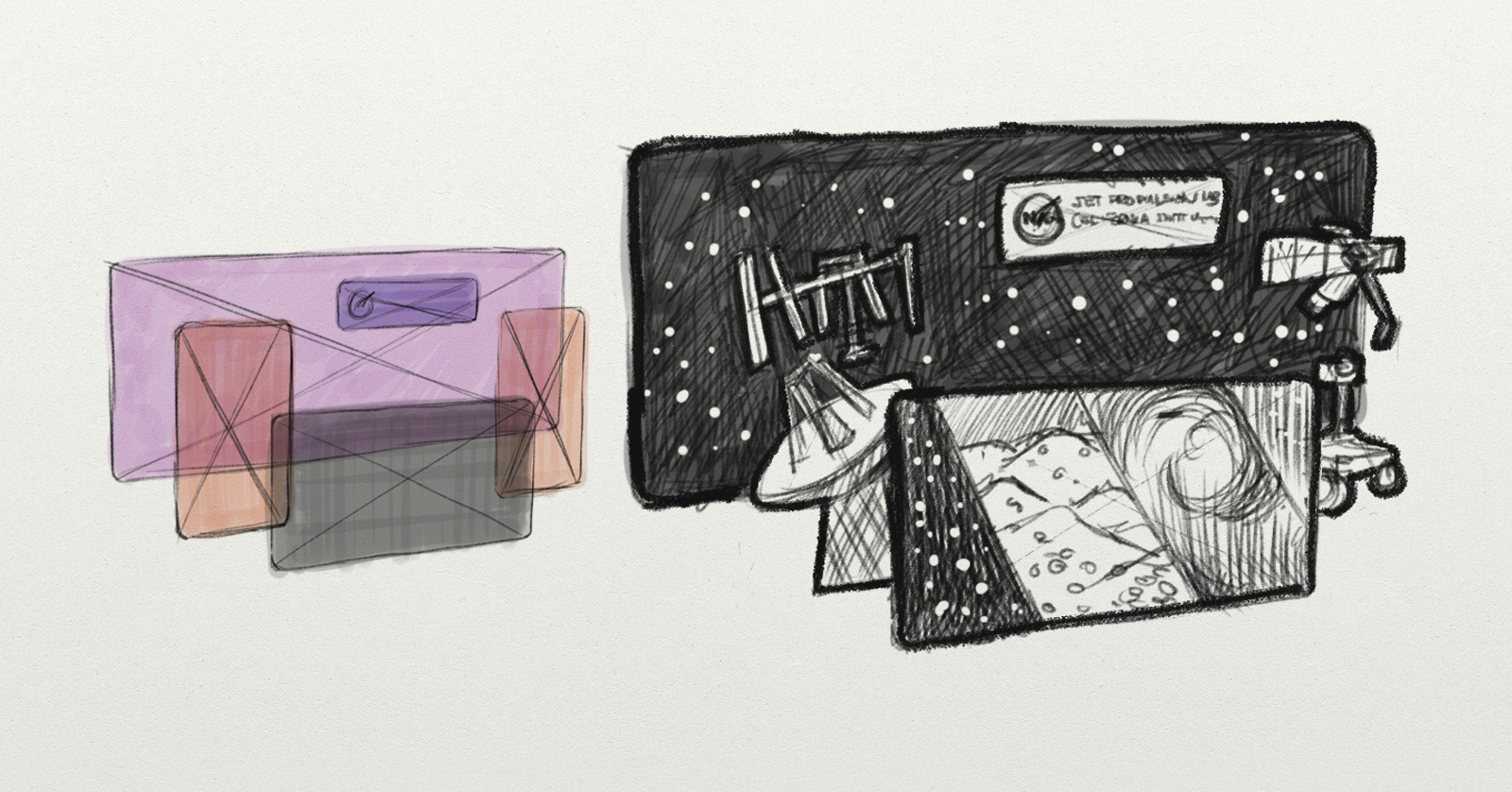
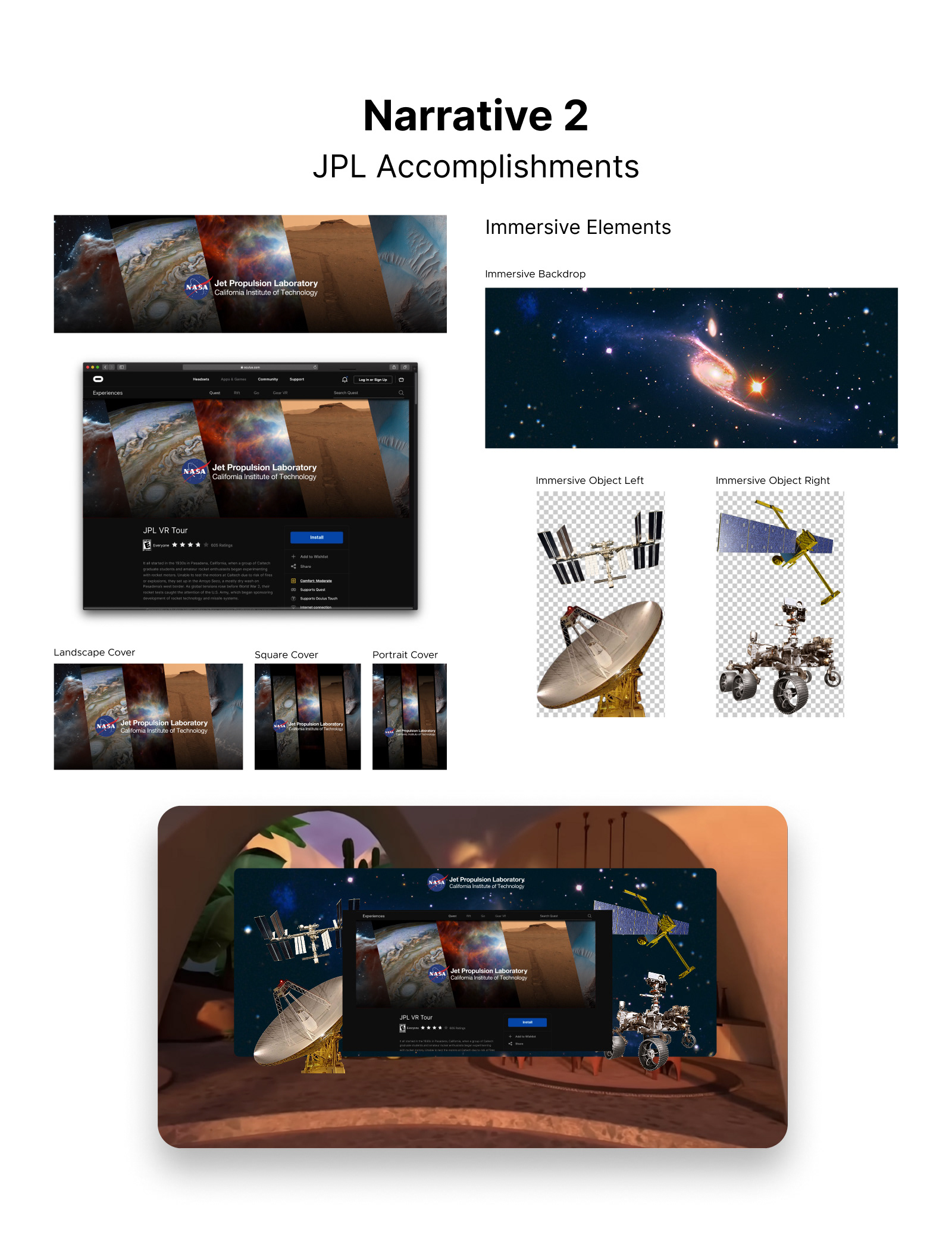
The second was a celebration of JPL's discoveries, a collage of deep space robotics achievements brought to life through floating left and right immersive objects that surround the viewer.
The final design carried this second direction forward, pairing iconic mission hardware with the Laboratory's facilities to give the tour a sense of depth and arrival.